
Government Work Report
Release date:
2020-05-22
— On May 22, 2020, at the Third Session of the 13th National People's Congress
Premier of the State Council, Li Keqiang
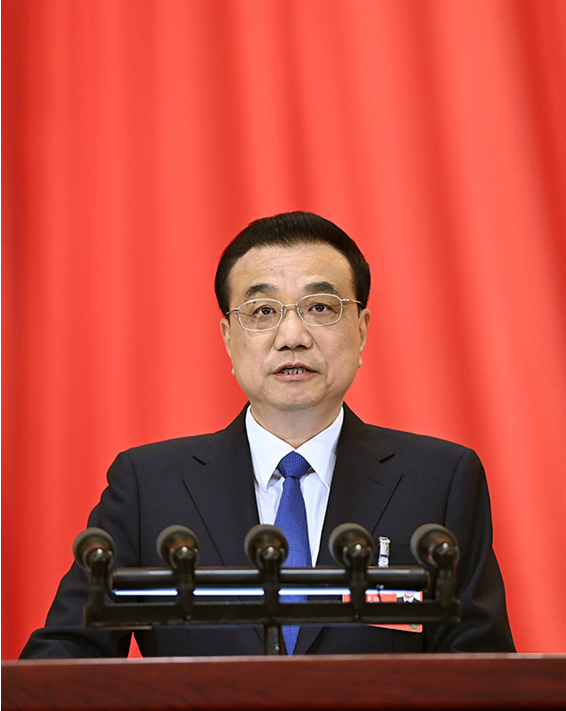
On May 22, Premier Li Keqiang delivered the Government Work Report on behalf of the State Council at the Third Session of the 13th National People's Congress.
Distinguished delegates:
Now, on behalf of the State Council, I present the government's work report to the conference for deliberation, and I also invite members of the National Committee of the Chinese People's Political Consultative Conference to share their comments.
The COVID-19 pandemic is the most rapidly spreading, widely infectious, and challenging-to-control major public health emergency China has faced since the founding of New China. Under the strong leadership of the Party Central Committee with Comrade Xi Jinping at its core, and through the extraordinary efforts—and sacrifices—of people across the country, we have achieved significant strategic gains in epidemic prevention and control. However, the pandemic is far from over, and the task of driving forward development remains exceptionally daunting. We must strive to minimize the losses caused by the outbreak and work tirelessly to fulfill this year’s economic and social development goals and tasks.
I. Review of 2019 and Work Since the Beginning of This Year
Last year, our country faced numerous difficulties and challenges. Global economic growth remained sluggish, international trade tensions intensified, and domestic economic pressures continued to mount. Under the strong leadership of the Party Central Committee with Comrade Xi Jinping at its core, the Chinese people of all ethnic groups worked together to overcome these obstacles, successfully achieving the key goals and tasks set for the year—and laying a decisive foundation for fully building a moderately prosperous society.
——The economy maintained overall stability. China’s gross domestic product reached 99.1 trillion yuan, representing a growth of 6.1%. Urban areas added 13.52 million new jobs, while the surveyed unemployment rate remained below 5.3%. Meanwhile, consumer prices for residents rose by 2.9%, and the country’s balance of international payments stayed broadly in equilibrium.
——The economic structure and regional layout continued to optimize. Total retail sales of consumer goods exceeded 40 trillion yuan, with consumption steadily playing a key driving role. Advanced manufacturing and modern service industries experienced relatively rapid growth. Grain output reached 1.33 trillion jin. For the first time, the urbanization rate of the resident population surpassed 60%, and major regional strategies were implemented in greater depth.
——New growth drivers continue to strengthen. Significant achievements have been made in scientific and technological innovation. Emerging industries keep expanding, while traditional industries are accelerating their upgrades. Mass entrepreneurship and innovation initiatives are being carried out in depth, with the number of enterprises increasing by more than 10,000 per day on average.
——China has taken significant steps in reform and opening-up. Structural reforms on the supply side continued to deepen, with new breakthroughs achieved in key areas. Tax and fee reductions totaling 2.36 trillion yuan exceeded the originally planned figure of nearly 2 trillion yuan, benefiting manufacturers and small and micro-enterprises the most. The government’s institutional reform tasks have been successfully completed, while the "delegation, regulation, and service" reform has been further advanced in depth. The STAR Market was established, and joint efforts under the Belt and Road Initiative have yielded fresh successes. Meanwhile, the implementing regulations for the Foreign Investment Law were introduced, and a new area within the Shanghai Free Trade Zone was added. As a result, both foreign trade and foreign investment have remained stable.
——Significant progress has been made in the three major battles. Rural poverty-stricken populations have decreased by 11.09 million, and the incidence of poverty has dropped to 0.6%, marking decisive achievements in the fight against poverty. Efforts to prevent and control pollution have continued steadily, with emissions of key pollutants continuing to decline, leading to overall improvements in the ecological environment. Meanwhile, financial markets have remained generally stable.
——People's livelihoods have continued to improve. Per capita disposable income of residents has surpassed 30,000 yuan. Basic social security systems—such as pensions, healthcare, and minimum living allowances—have been strengthened. Construction of affordable housing in urban areas and renovation of dilapidated rural homes have been steadily advanced. Meanwhile, the number of students receiving living allowances during compulsory education has increased by nearly 40%, and higher vocational colleges have expanded enrollment by an additional 1 million students.
We solemnly celebrated the 70th anniversary of the founding of the People's Republic of China, profoundly inspiring patriotic enthusiasm among people of all ethnic groups across the nation and rallying immense strength to achieve the great victory of socialism with Chinese characteristics in the new era.
We have strengthened Party conduct and integrity building, steadily carried out the thematic education campaign "Staying True to Our Original Aspiration and Keeping Our Mission Firmly in Mind," rigorously implemented the spirit of the Central Committee's Eight Regulations, and continuously tackled the "Four Undesirables," thereby easing burdens and reducing unnecessary pressures at the grassroots level.
China's distinctive major-country diplomacy has yielded abundant achievements. We successfully hosted the second Belt and Road International Cooperation Summit Forum and other significant home-field diplomatic events. President Xi Jinping and other Party and state leaders undertook visits to multiple countries, attending key global gatherings such as the G20 Leaders' Summit, the BRICS Leaders' Meeting, the CICA Summit, the SCO Summit, the East Asia Cooperation Leaders' Series Meetings, the China-EU Leaders' Meeting, and the China-Japan-South Korea Leaders' Meeting. Meanwhile, China has actively engaged in building and reforming the global governance system, championing the vision of a community with a shared future for humanity. Economically driven diplomacy and people-to-people exchanges have also proven highly effective. Overall, China has made vital contributions to advancing world peace and development.
Distinguished delegates!
After the outbreak of the COVID-19 pandemic, the Party Central Committee treated epidemic prevention and control as its top priority, with General Secretary Xi Jinping personally commanding and meticulously deploying efforts while firmly prioritizing the safety and health of people's lives. Under the leadership of the Party Central Committee, the Leading Group for COVID-19 Response promptly studied and formulated strategies, while the Central Guidance Team stepped up guidance and supervision. Meanwhile, the Joint Prevention and Control Mechanism of the State Council ensured coordinated efforts across the board. All regions and departments fulfilled their responsibilities, and every sector of society extended full support, enabling China to wage a people's war, a comprehensive battle, and a decisive campaign against the virus. Countless medical workers bravely fought on the frontlines, People's Liberation Army personnel took on heavy responsibilities with unwavering resolve, and scientific and technological experts collaborated tirelessly to tackle critical challenges. Community workers, public security officers, grassroots officials, journalists, and volunteers held fast to their posts, while delivery personnel, sanitation workers, and those involved in producing and transporting anti-epidemic supplies worked tirelessly despite immense hardship. Meanwhile, millions of ordinary laborers quietly contributed their dedication, and the people of Wuhan and Hubei demonstrated extraordinary resilience. Across society, compatriots from Hong Kong, Macao, Taiwan, and overseas Chinese communities generously donated money and supplies. Together, the sons and daughters of the Chinese nation stood united through thick and thin, standing shoulder to shoulder in mutual support, thus building an unyielding Great Wall against the pandemic.
In the fight against the epidemic, we have adhered to the overarching principles of firm confidence, working together in solidarity, adopting science-based prevention and control measures, and implementing precise strategies, ensuring that every task is carried out meticulously and effectively. We promptly introduced emergency measures, classifying COVID-19 as a Class-A infectious disease and activating the highest-level response for major public health emergencies in all regions. We resolutely fought—and ultimately achieved decisive victories—in the battles to defend Wuhan and Hubei Province, thanks to the decisive implementation of stringent containment measures. Mobilizing the entire nation’s resources, we dispatched over 40,000 medical personnel to provide critical support, built the Huoshenshan and Leishenshan hospitals, as well as makeshift field hospitals, rapidly expanded hospital bed capacity, prioritized the supply of medical materials, continuously refined treatment protocols, and firmly integrated traditional Chinese medicine with Western approaches. By focusing on "four centralized" strategies—centralized patient admission, treatment, care, and resource allocation—we spared no effort to save patients, maximizing recovery rates while minimizing mortality. To further curb the spread of the virus, we extended the national Spring Festival holiday, postponed school openings, encouraged flexible work resumption, and promoted staggered travel patterns. At the same time, we maintained robust community-based prevention and control efforts, emphasizing the "four early" principles—early detection, early reporting, early isolation, and early treatment—to rigorously contain sources of infection and effectively halt the epidemic's momentum. We also intensified research and development of drugs, vaccines, and diagnostic reagents, swiftly scaling up production of medical supplies to meet soaring demand within a remarkably short timeframe. Meanwhile, we ensured stable prices and adequate supplies of daily necessities, kept transportation networks running smoothly, and maintained reliable energy and fuel supplies across the country. Adapting to evolving pandemic dynamics, we steadily advanced toward normalized prevention and control measures. In response to the global spread of the virus, we promptly established robust systems to prevent imported cases and stepped up our care and support for Chinese citizens abroad. Finally, we actively engaged in international cooperation, upholding an open, transparent, and responsible approach by promptly sharing timely updates on the epidemic situation, proactively exchanging anti-epidemic technologies and best practices, and extending mutual assistance to combat the crisis together.
For a developing country like ours, with a population of 1.4 billion, effectively controlling the pandemic within a relatively short period while safeguarding people's basic livelihoods was no easy feat—it required immense effort and perseverance. Of course, we also paid a heavy price: the economy experienced negative growth in the first quarter, and both production and daily life were disrupted. Yet, prioritizing lives above all else was a cost we had to bear—and one that ultimately proved worthwhile. We have steadily balanced epidemic prevention and control with economic and social development, seizing every opportunity to resume work and production. To this end, we introduced 90 policy measures across eight key areas, including supporting enterprises, stabilizing employment, reducing or exempting certain taxes and fees, waiving tolls on all expressways, lowering energy costs, and providing subsidized loans. We also advanced the allocation of local government debt limits ahead of schedule, ensuring timely agricultural activities by focusing on spring planting without delay. Meanwhile, we remained steadfast in our commitment to poverty alleviation. Additionally, we provided targeted subsidies to frontline抗疫 workers and those facing financial hardship, doubling the temporary price subsidy rates. These comprehensive policies have directly benefited millions of people, helping to stabilize supply, maintain price levels, and accelerate the resumption of work and production. As a result, China’s economy has demonstrated remarkable resilience and untapped potential, laying a solid foundation for future growth.
Distinguished delegates!
Since last year, the remarkable achievements in economic and social development, as well as in epidemic prevention and control this year, are the direct result of the strong leadership of the Party Central Committee with Comrade Xi Jinping at its core, the scientific guidance of Xi Jinping Thought on Socialism with Chinese Characteristics for a New Era, and the united efforts of the entire Party, the armed forces, and people of all ethnic groups across the country. On behalf of the State Council, I extend my heartfelt gratitude to people of all ethnic groups nationwide, as well as to leaders of democratic parties, representatives of various people's organizations, and individuals from all sectors of society! My sincere thanks also go to our compatriots in the Hong Kong Special Administrative Region, the Macao Special Administrative Region, Taiwan, and overseas Chinese communities! Finally, I express my deepest appreciation to governments, international organizations, and friends from around the world who have shown concern and support for China’s modernization drive and its fight against the pandemic!
While acknowledging our achievements, we also clearly recognize the challenges and problems ahead. Affected by the global pandemic, the world economy has experienced a severe downturn, disrupting the flow of industrial and supply chains, shrinking international trade and investment, and causing volatility in commodity markets. Domestically, consumer spending, investment, and exports have all declined, putting significant pressure on employment. Businesses—especially private enterprises, as well as small, micro, and medium-sized firms—are facing mounting difficulties. Meanwhile, risks in sectors like finance are beginning to accumulate, and fiscal imbalances at the grassroots level are intensifying. At the same time, there are shortcomings in government operations: issues such as formalism and bureaucratic practices remain prominent, and unfortunately, some officials still fail to take responsibility, refuse to act, lack the necessary skills, or even engage in inappropriate behavior. Moreover, corruption continues to be a pressing concern in certain areas. In the context of epidemic prevention and control, numerous weaknesses have been exposed in public health and emergency management systems. The public still has valid concerns and suggestions that deserve our attention. We must strive to improve our work, fulfill our responsibilities diligently, and dedicate ourselves wholeheartedly to meeting the expectations of the people.
II. Key Development Goals for This Year and Overall Deployment for the Next Phase of Work
To do a good job this year, we must remain firmly under the strong leadership of the Party Central Committee with Comrade Xi Jinping at its core, guided by Xi Jinping Thought on Socialism with Chinese Characteristics for a New Era. We must comprehensively implement the spirit of the 19th National Congress of the Communist Party of China and the Second, Third, and Fourth Plenary Sessions of the 19th Central Committee, resolutely upholding the Party’s basic theory, basic line, and basic strategy. We should strengthen our "four consciousnesses," firmly uphold "four confidences," and ensure "two safeguards." Focusing closely on the goal of fully building a moderately prosperous society, we must coordinate and advance both epidemic prevention and control as well as economic and social development. Under the new normal of epidemic response, we will adhere to the overarching principle of pursuing progress while maintaining stability, embrace the new development philosophy, stay committed to supply-side structural reform as the main driver, and continue to leverage reform and opening-up as the engines propelling high-quality development. We will fight resolutely against the three major tough battles, intensify efforts to ensure "six priorities"—namely, stabilizing employment, safeguarding basic livelihoods, protecting market entities, ensuring food and energy security, maintaining stable industrial and supply chains, and supporting grassroots operations. At the same time, we will steadfastly pursue the strategy of expanding domestic demand, safeguarding both economic growth and overall social stability, and ensuring that we achieve the critical goals of winning the battle against poverty and fully realizing the vision of a moderately prosperous society in all respects.
Currently and in the period ahead, China’s development faces unprecedented risks and challenges. Yet we possess unique political and institutional advantages, a robust economic foundation, immense market potential, and the tireless dedication and wisdom of our billions of people. As long as we confront these challenges head-on, remain steadfast in our confidence for growth, strengthen our momentum for development, and effectively seize and leverage the critical strategic opportunities that lie ahead, we will surely overcome the current difficulties—and without a doubt, China’s future will be filled with hope.
After a comprehensive assessment of the situation, we have made appropriate adjustments to the expected targets originally considered before the pandemic. This year, our top priorities will be stabilizing employment and safeguarding people's livelihoods, resolutely winning the battle against poverty, and striving to achieve the goal of building a moderately prosperous society in all respects. Specifically, we aim to create more than 9 million new urban jobs, keep the surveyed urban unemployment rate around 6%, and maintain the registered urban unemployment rate at approximately 5.5%. Meanwhile, we expect the consumer price index to rise by about 3.5%. We will also work to stabilize and improve the quality of imports and exports, while maintaining basic balance in international payments. Additionally, we seek to ensure that residents' income growth keeps pace with economic growth. Under current standards, all rural residents living in poverty will have been lifted out of poverty, and all designated poverty-stricken counties will have shaken off their poverty status. At the same time, we will effectively manage major financial risks, continue to reduce energy consumption per unit of GDP, and further curb emissions of key pollutants—efforts aimed at fulfilling the goals and tasks set forth in the 13th Five-Year Plan.
It's important to note that we have not set a specific annual economic growth target, primarily because of the significant uncertainties surrounding the global pandemic and the international trade landscape, as well as the many unforeseen factors impacting China's development. By adopting this approach, we can better guide all sectors to focus their efforts on ensuring "six stabilizations" and "six guarantees"—with the "six guarantees" serving as the key priority for this year's "six stabilizations" initiatives. Safeguarding the bottom lines of the "six guarantees" will help stabilize the economy at its core; meanwhile, using stability as a foundation while striving for progress will lay a solid groundwork for fully building a moderately prosperous society. It’s crucial to recognize that sustained economic growth is essential—whether it’s about protecting employment and people’s livelihoods, achieving poverty alleviation goals, or effectively managing and mitigating risks. After all, maintaining stable economic operations is critical to the overall picture. To address these challenges, we must leverage reform and opening-up measures to stabilize employment, safeguard people’s livelihoods, and boost consumption, thereby stimulating market vitality, fostering steady growth, and charting a new path that enables us to respond effectively to shocks while nurturing a virtuous cycle.
A more proactive fiscal policy must be even more vigorous and effective. This year, the deficit-to-GDP ratio is planned to be set at above 3.6%, with the overall fiscal deficit increasing by 1 trillion yuan compared to last year. At the same time, 1 trillion yuan in special government bonds will be issued specifically to support pandemic response efforts. These measures are extraordinary responses tailored for an exceptional period. All of the aforementioned 2 trillion yuan will be directly transferred to local governments, where a special transfer-payment mechanism has been established. This ensures that funds flow swiftly and efficiently down to the grassroots level—reaching cities, counties, and communities—and directly benefit businesses and people. The primary focus will be on safeguarding employment, ensuring basic living standards, and supporting market entities. This includes providing critical assistance such as tax and fee reductions, rent and interest relief, and boosting both consumption and investment. We will strengthen the public finance system’s core role while firmly prohibiting any misappropriation or diversion of these funds. Fiscal spending must be rigorously optimized: essential expenditures for people’s livelihoods will only increase, never decrease; priority areas will receive robust financial backing; and non-essential, general-purpose spending will be drastically cut. Construction of new government buildings, halls, and facilities is strictly off-limits, as is any form of extravagance or waste. All levels of government must genuinely embrace austerity, starting with the central government leading by example. Central government spending this year will be arranged to decline significantly, with non-urgent and non-essential expenditures slashed by more than 50%. Any surplus or idle funds must be fully recovered and reallocated. Above all, we must strive to enhance the quality and efficiency of fiscal spending. Every dollar spent must be carefully managed and allocated precisely—ensuring that each resource is deployed where it matters most, addressing urgent needs effectively. Ultimately, our goal is to deliver tangible, meaningful benefits to businesses and the public, helping them feel the real impact of these targeted measures.
Prudent monetary policy should be more flexible and appropriately tailored. We will comprehensively employ measures such as lowering the reserve requirement ratio, cutting interest rates, and providing relending facilities, to guide broad money supply and the growth rate of social financing significantly higher than last year. At the same time, we will ensure that the人民币 exchange rate remains broadly stable at a reasonable and balanced level. Additionally, we must innovate monetary policy tools that directly reach the real economy, making it easier for businesses to secure loans and helping interest rates continue their downward trend.
The employment-first policy must be comprehensively strengthened. Fiscal, monetary, and investment policies should converge their efforts to support stable employment. We must strive to stabilize existing jobs, actively create new ones, and facilitate the reemployment of unemployed individuals. All regions should eliminate unreasonable restrictions on employment, fully implement employment-promoting measures, and maximize the use of all available strategies to expand job opportunities.
Poverty alleviation is a critical task that must be accomplished to fully build a moderately prosperous society. We must adhere to the current poverty reduction standards, increase investment in poverty relief, strengthen the implementation of targeted measures, and ensure that all remaining impoverished populations are lifted out of poverty. At the same time, we need to improve and effectively enforce mechanisms for monitoring and assisting those at risk of falling back into poverty, thereby solidifying the achievements made in poverty eradication. We must also wage a vigorous battle to protect our blue skies, clean waters, and pristine lands, striving to achieve the phased goals set forth in the campaign against pollution. Additionally, we must enhance risk prevention and control in key areas such as finance, firmly safeguarding against systemic risks and ensuring that such risks never materialize.
Nearly five months of this year have already passed. In the next phase, we must maintain unwavering efforts in regular epidemic prevention and control, while simultaneously accelerating all tasks related to economic and social development. The policies introduced this time not only remain robust but also take sustainability into account—and they can be further refined as circumstances evolve. We are determined and fully capable of achieving our annual goals and objectives.
III. Intensify the implementation of macroeconomic policies, with a focus on stabilizing businesses and safeguarding employment.
Ensuring employment and people's livelihoods requires stabilizing the hundreds of millions of market entities, doing our utmost to help businesses—especially small, micro, and medium-sized enterprises, as well as individual business operators—overcome their current challenges.
Increase the力度 of tax and fee reductions. Strengthen temporary policies while integrating them with long-term institutional arrangements, allowing "water to nourish the fish," thereby helping market entities alleviate difficulties and foster growth. Continue implementing last year's measures, such as lowering the VAT rate and corporate pension insurance contribution rates, which are expected to generate additional tax and fee cuts totaling approximately 500 billion yuan. Additionally, extend until the end of this year all previously introduced tax and fee reduction policies that were set to expire by June, including exemptions from employer contributions for pensions, unemployment, and work-related injury insurance for small, medium, and micro-sized enterprises; reductions in VAT for small-scale taxpayers; and waivers of VAT on public transportation, catering, accommodation, tourism, entertainment, as well as cultural and sports services. Meanwhile, the payment deadline for income taxes owed by small and micro-enterprises and individual businesses will also be deferred until next year. Overall, these measures are projected to deliver more than 2.5 trillion yuan in new relief for businesses throughout the year. We must firmly ensure that tax and fee reduction policies reach enterprises, safeguarding their vitality today to secure a brighter future tomorrow.
Promote measures to reduce business operating costs. The policy of lowering industrial and commercial electricity prices by 5% has been extended until the end of this year. Average broadband and dedicated-line charges will also be cut by 15%. Additionally, rent reductions or deferrals will be provided for state-owned properties, encouraging all types of property owners to offer similar concessions—and offering policy support to make it happen. We will firmly tackle and rectify any illegal fees imposed on businesses.
Strengthen financial support for stabilizing businesses. The policy of extending loan principal and interest repayment deadlines for small, medium, and micro enterprises will be further extended until the end of March next year. All eligible inclusive loans to small and micro businesses should be deferred as much as possible, while loans to other struggling enterprises will be subject to negotiated extensions. Enhance the assessment and incentive mechanisms to encourage banks to confidently, willingly, and effectively extend credit, significantly boosting credit loans, first-time loans, and rollover loans without principal repayment for small and micro enterprises. Leverage fintech and big data to reduce service costs and improve the precision of financial services. Meanwhile, substantially expand the coverage of government-backed financing guarantees while markedly lowering their fees. Major commercial banks are expected to maintain an inclusive loan growth rate exceeding 40% for small and micro enterprises. Promote the sharing of enterprise-related credit information and support businesses in scaling up bond financing. Strengthen regulatory oversight to prevent funds from being diverted for speculative arbitrage activities and crack down on malicious debt evasion. Financial institutions and borrowing enterprises should thrive together; banks are encouraged to offer reasonable profit concessions. To safeguard market entities, we must ensure a significant improvement in the accessibility of loans for small, medium, and micro enterprises, as well as a noticeable reduction in their overall financing costs.
We will make every effort to stabilize and expand employment. Strengthen support for employment in key industries and among priority groups. This year, China will see 8.74 million college graduates, and we must promote market-oriented and socially-driven employment opportunities. Both universities and local governments should provide continuous employment services, while also expanding recruitment for grassroots-level service programs. We’ll ensure smooth resettlement and robust employment guarantees for veterans. Additionally, we’ll implement policies enabling migrant workers to equally access employment services in their places of work. We’ll also assist vulnerable groups—such as people with disabilities and zero-employment households—in finding jobs. China is home to hundreds of millions of flexible workers, including those in the gig economy. This year, we’re introducing a voluntary deferral policy for social insurance contributions for low-income individuals, and all administrative fees related to employment will be completely waived. Meanwhile, we’ll rationally designate areas for mobile vendors to operate. To help stabilize and create more job opportunities, we’ll offer training programs that lead to stable and expanded employment. We’ll intensify market-oriented skills training, encourage work-based training initiatives, and jointly develop productive training facilities that benefit both employers and employees. Over the next one to two years, we aim to deliver vocational skills training to over 35 million people, while also expanding enrollment at higher vocational colleges by an additional 2 million students. Our goal is to equip more workers with valuable skills, ensuring they have better prospects in the job market.
IV. Rely on reform to unleash the vitality of market entities and boost new drivers for growth
The greater the challenges and difficulties, the more we must deepen reform, remove institutional and systemic barriers, and unleash endogenous development momentum.
Deepen the "delegation, regulation, and service" reform. Under the context of regular COVID-19 prevention and control, we must adjust measures, streamline procedures, and accelerate the full resumption of work, production, markets, and businesses. Promote more service initiatives to be handled seamlessly online, enabling enterprises to complete the entire business establishment process entirely through digital platforms. Relax restrictions on the registered business locations for small and micro enterprises as well as individual businesses, making it easier for entrepreneurs of all types to register and promptly access supportive policies. Support integrated development among large, medium-sized, and small enterprises. Further refine the social credit system. By upholding fair competition through impartial regulation, we will continuously foster a business environment that is market-oriented, rule-of-law-based, and globally competitive.
Promote market-oriented reforms in resource allocation. Encourage small and medium-sized banks to bolster their capital bases and enhance governance, enabling them to better serve micro, small, and medium-sized enterprises. Reform the ChiNext board and pilot a registration-based system, fostering the development of a multi-tiered capital market. Strengthen the role of insurance in providing risk protection. Grant greater autonomy to provincial governments over land-use planning and construction. Facilitate talent mobility, nurture technology and data markets, and unlock the full potential of various production factors.
Enhance the effectiveness of state-owned asset and state-owned enterprise reforms. Implement the three-year action plan for SOE reform. Strengthen the modern enterprise system, improve the regulatory framework for state-owned assets, and deepen reforms in the mixed-ownership model. Basically complete the separation of social functions from enterprises and resolve long-standing historical issues. State-owned enterprises should focus on their core responsibilities and businesses, refine market-oriented operational mechanisms, and boost their core competitiveness.
Optimize the development environment for the private sector. Ensure that private enterprises have equal access to production factors and policy support, and eliminate unreasonable regulations tied to enterprise type. Set a deadline for completing the task of settling overdue payments owed by government agencies and state-owned enterprises to private and small-to-medium-sized businesses. Foster a healthy, transparent relationship between government and business, and promote the sound development of the non-public sector economy.
Promote the upgrading of manufacturing and the development of emerging industries. Support high-quality growth in the manufacturing sector. Substantially increase medium- and long-term loans for manufacturing. Develop the industrial internet, advance smart manufacturing, and foster vibrant clusters of new industries. Additionally, bolster productive service sectors such as R&D design, modern logistics, and inspection, testing, and certification services. E-commerce, online shopping, and digital services—new business models that played a critical role during the pandemic—should continue to benefit from supportive policies. We must fully embrace "Internet+" initiatives to build new competitive advantages in the digital economy.
Enhance the capacity to support scientific and technological innovation. Steadily fund basic research and application-oriented basic research, encourage enterprises to increase R&D investments, and foster integrated innovation across industry, academia, and research institutions. Accelerate the establishment of national laboratories, restructure the national key laboratory system, nurture socially-driven R&D organizations, and strengthen efforts to tackle critical core technologies. Promote science and technology that improve people's livelihoods. Deepen international cooperation in science and technology. Strengthen intellectual property protection. Reform mechanisms for commercializing scientific and technological achievements, ensuring smooth flow throughout the innovation chain, and creating a research environment that encourages innovation while embracing calculated risks of failure. For key projects, adopt an open-call approach—whomever is best equipped to deliver will take the lead.
Deeply advance mass entrepreneurship and innovation by all. Develop venture capital and equity investment, and increase entrepreneurial guarantee loans. Deepen the new round of comprehensive innovation reform trials, establish a batch of new demonstration bases for mass entrepreneurship and innovation, uphold inclusive and prudent regulation, foster platform economies and sharing economies, and further unleash societal creativity.
V. Implement the strategy of expanding domestic demand and accelerate the transformation of China's economic development model.
China has vast domestic demand potential. We must deepen supply-side structural reforms, emphasize a people-centered approach, and effectively combine boosting consumption with expanding investment—allowing the two to reinforce each other for mutual growth.
Boosting consumer recovery by stabilizing employment, boosting incomes, and safeguarding people's livelihoods—thereby enhancing residents' willingness and ability to spend. We will support the revitalization of lifestyle service industries such as catering, shopping malls, culture, tourism, and household services, while also promoting the seamless integration of online and offline channels. Additionally, we’ll stimulate auto consumption and proactively address the persistent challenge of parking shortages. Furthermore, we’ll expand elderly care and childcare services, as well as foster the growth of the broader health industry. Meanwhile, we’ll revitalize pedestrian streets through renovation and upgrades. Finally, we’ll back e-commerce and express delivery services in rural areas, helping to unlock new avenues for rural consumption. By adopting a multi-pronged approach, we aim to meet the diverse needs of the public and further expand consumption.
Expand effective investment. This year, local governments are set to issue special-purpose bonds totaling 3.75 trillion yuan—up by 1.6 trillion yuan compared to last year—and the proportion of these bonds that can be used as project equity capital will be increased. Meanwhile, central government budget allocations for key investments will reach 600 billion yuan. Priority will be given to supporting the "Two New and One Major" initiatives—new infrastructure, new urbanization, and major projects—that not only boost consumption and improve people's livelihoods but also help optimize industrial structures and enhance long-term growth momentum. Specifically, this includes: - Strengthening the development of new infrastructure, such as advancing next-generation information networks, expanding 5G applications, building data centers, and increasing facilities like charging piles and battery swap stations, while promoting the adoption of new energy vehicles to stimulate fresh consumer demand and drive industrial upgrades. - Enhancing new urbanization efforts by significantly improving public facilities and service capabilities in county-level cities, catering to the growing needs of rural residents seeking employment and settling down in these areas. - Launching renovations on 39,000 older urban residential communities, with support for upgrading utility networks, installing elevators, and other improvements, while also fostering diverse community services such as home-based elderly care, meal delivery, and cleaning assistance. Additionally, critical infrastructure projects in transportation and water resources will receive robust backing. An additional 100 billion yuan will be allocated as capital for national railway construction. To ensure sustainable returns on investment, we will refine project selection processes, avoiding any lingering negative impacts and maximizing the long-term benefits of each initiative.
Deeply advance new-type urbanization. Leverage the comprehensive driving roles of central cities and city clusters to foster industries and boost employment. Uphold the principle that housing is for living in, not for speculation, and adopt city-specific policies to promote the steady and healthy development of the real estate market. Enhance convenient, barrier-free facilities to make cities more livable and ideal for both work and life.
Accelerate the implementation of regional development strategies. Continue advancing the large-scale development of the western region, the comprehensive revitalization of Northeast China, the rise of central China, and the leading development of eastern China. Deeply promote coordinated development among Beijing, Tianjin, and Hebei; build the Guangdong-Hong Kong-Macao Greater Bay Area; and advance integrated development in the Yangtze River Delta. Foster joint efforts for ecological protection along the Yangtze River Economic Belt. Prepare an outline plan for ecological conservation and high-quality development in the Yellow River Basin. Drive forward the construction of the Chengdu-Chongqing Twin-City Economic Circle. And boost faster development in old revolutionary base areas, ethnic regions, border areas, and poverty-stricken regions. Additionally, nurture the marine economy.
Implement the comprehensive package of policies to support Hubei's development, helping to safeguard employment, protect people's livelihoods, and ensure the smooth functioning of daily operations, thereby fostering a full recovery of economic and social order.
Enhance the effectiveness of ecological and environmental governance. Emphasize pollution control that is law-based, science-driven, and precisely targeted. Deepen efforts to tackle air pollution in key regions. Strengthen the construction of wastewater and waste disposal facilities, and promote household waste sorting. Accelerate the relocation and upgrading of hazardous chemical production enterprises located in densely populated areas. Expand the energy-saving and environmental protection industries. Severely punish illegal activities involving the hunting, trading, and consumption of wild animals. Implement major projects for the protection and restoration of critical ecosystems, fostering progress in ecological civilization.
Ensure energy security. Promote the clean and efficient use of coal, develop renewable energy sources, improve the integrated oil, gas, and electricity production, supply, and sales system, and enhance energy reserve capabilities.
6. Ensure the achievement of poverty alleviation goals and promote bumper agricultural harvests while increasing farmers' incomes.
Implement measures to eradicate poverty and promote rural revitalization, ensure the supply of essential agricultural products, and improve farmers' living standards.
We must resolutely win the battle against poverty. We will intensify efforts in the remaining impoverished counties and villages, ensuring stable employment for migrant workers at their places of work. At the same time, we’ll launch consumption-driven poverty alleviation initiatives to support the recovery and growth of poverty-fighting industries. Additionally, we’ll strengthen follow-up support for relocation projects aimed at lifting families out of poverty. Furthermore, we’ll deepen cooperation between eastern and western regions as well as reinforce targeted poverty alleviation efforts by central government units. We’ll also bolster safety nets to provide essential support for vulnerable populations facing extreme poverty. Lastly, we’ll conduct a comprehensive census to assess progress in poverty eradication. Meanwhile, we’ll continue implementing key support policies for counties that have officially “shaken off poverty.” Looking ahead, we’ll seamlessly integrate poverty reduction strategies with rural revitalization initiatives, working tirelessly to help脱贫 communities achieve prosperity and uplift their livelihoods.
Focus on strengthening agricultural production. Maintain stable grain planting areas and yields, increase the multiple cropping index, raise the minimum procurement price for rice, enhance rewards for major grain-producing counties, and vigorously combat severe pests and diseases. Support the production of oilseed crops like soybeans. Punish illegal activities that encroach upon farmland, and build 80 million mu of high-standard farmland. Promote the development and adoption of superior crop varieties. Improve agricultural machinery subsidy policies. Deepen rural reform initiatives. Strengthen disease prevention and control measures against outbreaks such as African swine fever, restore pig production, and expand livestock, poultry, and aquaculture farming. Enhance the nationwide agricultural product distribution system. Firmly enforce the "Rice Bag" responsibility system under provincial governors and the "Vegetable Basket" responsibility system under city mayors. With 1.4 billion Chinese people relying on us for their food supply, we have both the capability and the unwavering determination to keep our nation's food security firmly in our own hands.
Expand channels for farmers to find employment and increase their incomes. Support farmers in pursuing local job opportunities and entrepreneurship, foster the integrated development of primary, secondary, and tertiary industries, and scale up work-for-relief programs, ensuring that returning migrant workers can earn wages and build sustainable livelihoods. Strengthen vocational skills training for farmers and address, in accordance with the law, the persistent issue of unpaid wages owed to migrant workers. Provide support to moderately sized agricultural operators and enhance socialized services tailored to farming households. Encourage deep processing of agricultural products and refine policies that guarantee land-use rights for rural industrial development. Bolster the financial strength of collective economies, while increasing targeted bond investments to back modern agricultural infrastructure, safe drinking water projects, and initiatives aimed at improving rural living environments—continuously enhancing farmers' quality of life and production conditions.
7. Advance higher-level opening-up and stabilize the foundation of foreign trade and foreign investment.
Facing changes in the external environment, we must steadfastly deepen our commitment to opening up to the world, stabilize industrial and supply chains, and leverage openness to drive reform and foster development.
Promote the fundamental stability of foreign trade. Focus on supporting enterprises in securing more orders, stabilizing jobs, and safeguarding employment by increasing credit allocation, expanding coverage of export credit insurance, reducing compliance costs for imports and exports, and encouraging domestic sales of exported products. Accelerate the development of new business models such as cross-border e-commerce, and enhance international cargo transportation capacity. Advance pilot programs for innovative development of the service trade in this new round. Successfully organize the third China International Import Expo, actively expand imports, and foster a larger, higher-quality global market open to the world.
Actively leverage foreign investment. Significantly shorten the negative list for foreign investment access and introduce a negative list for cross-border trade in services. Deepen reform and opening-up in special economic zones. Grant greater autonomy in reform and opening-up to pilot free trade zones, establish additional pilot free trade zones and comprehensive bonded areas in central and western regions, and expand comprehensive pilot programs aimed at further opening up the service sector. Accelerate the development of Hainan Free Trade Port. Foster a market environment where both domestic and foreign-invested enterprises are treated equally and can compete fairly.
High-quality joint building of the Belt and Road Initiative. We will uphold the principles of extensive consultation, joint contribution, and shared benefits, adhere to market-oriented approaches and internationally accepted norms, leverage the primary role of enterprises, and pursue mutually beneficial cooperation. At the same time, we will guide foreign investment toward healthy and sustainable development.
Promote trade and investment liberalization and facilitation. Firmly uphold the multilateral trading system and actively participate in WTO reforms. Push forward the signing of the Regional Comprehensive Economic Partnership agreement, and advance free-trade negotiations among China, Japan, South Korea, and other partners. Jointly implement the Phase One economic and trade agreement between China and the U.S. China is committed to strengthening economic and trade cooperation with countries worldwide, fostering mutually beneficial outcomes and win-win partnerships.
8. Focus on safeguarding and improving people's livelihoods, and promote reform and development in social undertakings.
When facing difficulties, we must firmly safeguard the bottom line of basic people's livelihoods and strive to address issues that matter most to the public.
Strengthen the construction of the public health system. Prioritize life above all else, reform the disease prevention and control mechanism, enhance capacity-building in infectious disease prevention and treatment, improve the direct reporting and early warning systems for infectious diseases, and ensure timely, open, and transparent release of epidemic information. Make effective use of the special national bonds allocated for pandemic response, significantly increase investment in vaccine, drug, and rapid-testing technology development, expand medical facilities dedicated to epidemic prevention and treatment, deploy more mobile laboratories, bolster emergency supply guarantees, and reinforce grassroots-level health and epidemic prevention efforts. Accelerate the development of a robust public health workforce. Deeply advance the patriotic health campaign. Promote health and hygiene knowledge widely, and encourage healthy, civilized lifestyles. We must dramatically boost our prevention and control capabilities, resolutely prevent outbreaks from rebounding, and firmly safeguard the health of our people.
Enhance the quality of basic medical services. The per capita fiscal subsidy for residents' medical insurance will be increased by 30 yuan, and a pilot program will be launched to enable direct inter-provincial settlement of outpatient expenses. Medical institutions affected by the pandemic will receive targeted support. Deepen comprehensive reforms of public hospitals. Promote the "Internet + Healthcare" model. Establish regional medical centers. Strengthen the capacity of medical services in urban and rural communities. Advance the tiered diagnosis and treatment system. Foster the revitalization and development of traditional Chinese medicine while reinforcing the integration of TCM with Western medicine. Build harmonious doctor-patient relationships. Implement stringent food and drug regulations to ensure safety.
Promote equitable development and quality improvement in education. Uphold the principle of fostering moral integrity and cultivating well-rounded individuals. Organize primary and secondary school teaching, as well as college entrance exams, in an orderly manner. Strengthen the construction of boarding schools in townships, small-scale rural schools, and schools located in county seats. Enhance policies to ensure seamless access to compulsory education for children accompanying their parents who migrate for work. Ensure high-quality special education and continuing education programs, while supporting and regulating private educational institutions. Expand inclusive preschool education and assist private kindergartens facing financial challenges. Drive the substantive development of higher education, advance the establishment of world-class universities and disciplines, and provide support for universities in central and western regions. Broaden enrollment opportunities at colleges and universities for students from rural and impoverished areas. Foster vocational education and reinforce efforts to build a robust teaching workforce. Accelerate the integration of information technology into education. It is essential to maintain stable investment in education, optimize the allocation of resources, and narrow disparities among urban-rural areas, regions, and schools—ensuring that educational resources benefit every family and child, paving the way for a brighter future for all.
Increase efforts to strengthen basic livelihood safeguards. Raise the basic pensions for retirees and enhance the minimum standard for basic old-age pensions for urban and rural residents. Implement provincial-level unified collection and disbursement of enterprise employee basic pension insurance funds, while also increasing the central government’s adjustment ratio. With nearly 300 million people nationwide already receiving pensions, it is imperative to ensure timely and full payments. Fully implement preferential policies for veterans and provide proper compensation to those who have died in the line of duty. Expand the coverage of unemployment insurance, extending benefits to migrant workers and other unemployed individuals who have contributed for less than one year, making them eligible for support in their places of residence. Further refine the social assistance system by broadening the scope of minimum living security programs. Ensure that all eligible urban and rural families facing financial hardship are fully covered under the program, promptly including unemployed urban residents and returning migrants who meet the criteria into the safety net. Additionally, provide targeted assistance to individuals experiencing temporary difficulties due to disasters, illness, or disability. By firmly safeguarding the basic livelihoods of all vulnerable populations, we not only protect people’s well-being but also empower more unemployed individuals to confidently pursue new employment opportunities and entrepreneurial ventures.
Enrich the spiritual and cultural lives of the masses. Cultivate and practice socialist core values, and promote the development of philosophy, social sciences, journalism and publishing, as well as radio, film, and television. Strengthen the protection, preservation, and utilization of cultural relics, while also advancing the inheritance of intangible cultural heritage. Enhance public cultural services, organize the Beijing Winter Olympics and Winter Paralympics, and encourage nationwide fitness and reading initiatives—empowering society as a whole to remain vibrant, positive, and committed to moral excellence.
Strengthen and innovate social governance. Enhance community management and service mechanisms. Bolster rural governance. Support the healthy development of social organizations, humanitarian aid, volunteer services, and charitable initiatives. Safeguard the legitimate rights and interests of women, children, seniors, and people with disabilities. Improve the petitioning system, expand legal aid services, promptly address reasonable public demands, and effectively resolve conflicts and disputes. Conduct the Seventh National Population Census. Strengthen efforts to build national security capabilities. Refine the social security prevention and control system, crack down on all types of crimes in accordance with the law, and work toward building a higher-level, safer China.
Strengthen responsibilities for safe production. Enhance disaster preparedness against floods, fires, earthquakes, and other hazards, provide robust meteorological services, and improve capabilities in emergency management, disaster relief, and prevention/mitigation efforts. Implement targeted special rectifications for safe production, and resolutely prevent the occurrence of serious and particularly major accidents.
Distinguished delegates!
Faced with daunting and heavy tasks, governments at all levels must consciously align themselves—ideologically, politically, and in action—with the Party Central Committee with Comrade Xi Jinping at its core. They should firmly uphold the development philosophy centered on the people, fully implement the requirements for comprehensively strengthening Party governance, adhere to law-based administration, and build a government under the rule of law. At the same time, they must promote transparency in government affairs and continuously enhance their governance capabilities. Government agencies must accept supervision from the people's congresses at the same level and their standing committees in accordance with the law, proactively embrace democratic oversight from the Chinese People's Political Consultative Conference, and willingly submit to social and public opinion scrutiny. Strengthen audit oversight, and effectively leverage the roles of mass organizations such as trade unions, the Communist Youth League, and the All-China Women's Federation. Government officials must conscientiously accept oversight from the legal system, disciplinary inspection bodies, and the general public. Furthermore, efforts must be intensified to build a clean and honest government, resolutely combating corruption in all its forms.
Governments at all levels must always adhere to the principle of seeking truth from facts, firmly grasp the basic national conditions of socialism in its primary stage, follow objective laws, and proceed entirely from reality while focusing on doing our own tasks well. We must vigorously address the "Four Undesirables"—formalism, bureaucratism, hedonism, and extravagance—and resolutely reject these harmful practices. By freeing grassroots cadres from the constraints of formalism, we can empower them to wholeheartedly pursue innovation and entrepreneurship, enabling those who take responsibility to step up and ensuring that public servants fulfill their duties with dedication. Above all, we must rely closely on the people, respect the pioneering spirit at the grassroots level, and push forward reform and opening-up with even greater determination. This will unlock societal vitality, rally the wisdom and strength of hundreds of millions of people, and give us the confidence to overcome any challenge or difficulty we may face. All officials should bravely confront difficulties without shying away, prioritizing practical action above all else. Together, let’s unite our efforts to drive development and safeguard people’s livelihoods. As long as we remain steadfastly committed to sharing both joys and hardships with the people and continue forging ahead with determination, the Chinese people’s aspiration for a better life will surely be realized.
This year, we must carefully formulate the "14th Five-Year" Plan, outlining a blueprint for embarking on a new journey toward the second centenary goal.
Distinguished delegates!
We must uphold and improve the system of ethnic regional autonomy, support faster development in minority regions and among ethnic minorities, and strengthen the sense of community among the Chinese nation. We will comprehensively implement the Party’s basic principles on religious work, and encourage religious figures and believers to play an active role in promoting economic and social progress. Overseas Chinese compatriots are always close to our motherland and serve as vital bridges connecting China with the rest of the world. We should fully leverage the unique strengths of overseas Chinese communities and their families, continuously enhancing the cohesion of all Chinese sons and daughters, and working together with one heart to create a brighter future.
Since last year, significant progress has been made in national defense and military building. The People's Armed Forces have demonstrated their outstanding qualities—heedful of the Party’s command, ready to respond swiftly to orders, and bravely shouldering heavy responsibilities—in the fight against COVID-19. We must thoroughly implement Xi Jinping’s Thought on Strengthening the Military and earnestly carry forward the military strategic guidelines for the new era. Upholding political integrity as the foundation of our armed forces, we will continue advancing military reforms, fostering military strength through science and technology, cultivating talented personnel, and governing the military according to law. We must firmly uphold the Communist Party’s absolute leadership over the People’s Armed Forces and rigorously enforce the system of responsibility vested in the Chairman of the Central Military Commission. At the same time, we will spare no effort in intensifying combat readiness training and ensuring that our troops are always prepared to safeguard national sovereignty, security, and development interests. To this end, we will wage a decisive battle to fully implement the “13th Five-Year Plan” for military development and simultaneously begin drafting the “14th Five-Year Plan” for military building. We will deepen defense and military reforms, enhance logistical and equipment support capabilities, and accelerate innovation in defense-related science and technology. Moreover, we will further refine the national defense mobilization system, ensuring that the unity among the military, government, and people remains as solid as ever—unshakable and unbreakable.
We must comprehensively and accurately implement the principles of "One Country, Two Systems," "Hong Kong people governing Hong Kong," "Macao people governing Macao," and a high degree of autonomy. We will establish and improve the legal framework and enforcement mechanisms in the Special Administrative Regions to safeguard national security, and ensure the fulfillment of the SAR governments' constitutional responsibilities. We will also support Hong Kong and Macao in developing their economies, enhancing people's livelihoods, and better integrating into the broader context of national development, thereby maintaining Hong Kong and Macao's long-term prosperity and stability.
We must uphold the overarching principles and policies for cross-Strait work, firmly adhere to the One-China principle, and promote the peaceful development of cross-Strait relations based on the 1992 Consensus. We will resolutely oppose and curb "Taiwan independence" separatist activities. At the same time, we will continue to refine institutional arrangements and policy measures that foster cross-Strait exchanges and cooperation, deepen integrated development across the Strait, and safeguard the well-being of Taiwan compatriots. By uniting the vast majority of Taiwan compatriots to jointly oppose "Taiwan independence" and advance reunification, we will surely usher in a bright future of national rejuvenation.
In addressing global challenges such as public health crises and severe economic downturns, countries must join hands and move forward together. China will strengthen pandemic cooperation with nations worldwide, foster stability in the global economy, advance global governance, and uphold the international system centered on the United Nations, as well as the international order based on international law. Together, we will promote the building of a community with a shared future for humanity. China remains steadfastly committed to the path of peaceful development, deepening its friendly partnerships with countries around the world through expanded openness. As always, China continues to be a vital force in advancing global peace, stability, and prosperity.
Distinguished delegates!
The Chinese nation has always been undaunted by hardships and obstacles. Today's Chinese people possess the unwavering determination and capability to overcome any challenge. We must unite even more closely around the Party Central Committee with Comrade Xi Jinping at its core, firmly uphold the great banner of socialism with Chinese characteristics, and, guided by Xi Jinping Thought on Socialism with Chinese Characteristics for a New Era, bravely face difficulties, forge ahead with resolve, and seamlessly advance both epidemic prevention and control as well as economic and social development. Let us strive tirelessly to fulfill the annual goals and tasks, working tirelessly to build our country into a prosperous, democratic, civilized, harmonious, and beautiful socialist modern power, and to realize the Chinese Dream of national rejuvenation!
(Reposted from: China Government Network)
More news

Phone: +86-533-7993801 +86-533-7993809
Email: sdsunway@sdsunway.com.cn
Address: No. 22, Lianchang Middle Road, Linzi District, Zibo City, Shandong, China
Copyright © 2025 Shandong Sunway Chemical Group Co., Ltd. SEO